
Pediatric Food Sensitivity Therapy in Rhode Island

Helping Your Picky Eater
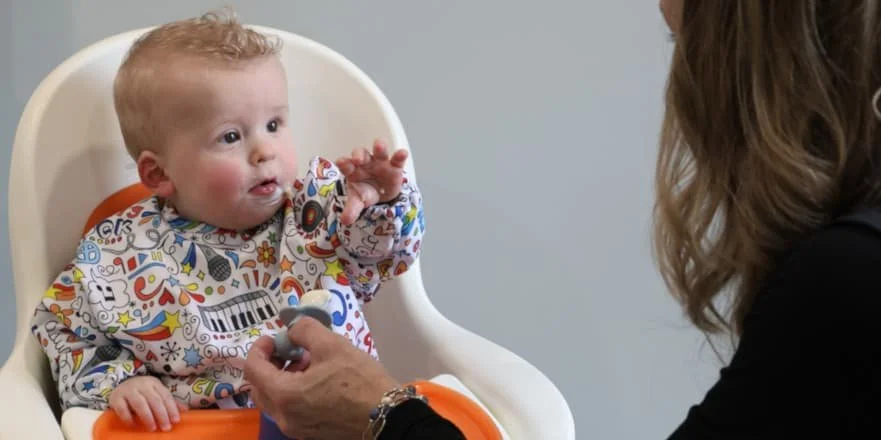
Many children struggle with food sensitivity. What’s often “fussiness” or “pickiness” is really a sign that your child has a developmental or sensory processing disorder. We at McNeill Children’s Institute help children across the senses of smell, taste, and touch to develop normal, effective feeding patterns and behaviors.
How to Approach Feeding
Your Picky Eater
When you’re working with your child at home, you can use similar sensory-friendly feeding strategies that we use at MCI to reinforce the work we do.
Cook With Them
Have your child spend time in the kitchen with you. Research shows that children tend to be more willing to try the foods they have helped prepare!
Play With Food
Letting your child play with food encourages a multi sensory approach! Looking, touching, smooshing, and manipulating may help eliminate “unknown” factors and enhance their ability to tolerate new textures.
Encourage Exploration
Actions include: Having them look, touch it to their face, give it a kiss, lick, take a bite, chew, spit, or swallow!
Use Condiments
Letting your child add their favorite condiments to a new food can help disguise bold new flavors, improve their ability to tolerate the texture or add more nutrients. Consider all: sweet, tangy, creamy etc.
Be Creative
Add veggies to smoothies, homemade breads and muffins and more. This can improve tactile exploration food presentation and visual appeal, as well as decrease anxiety around new foods.
Provide Alternatives
When offering a new or non preferred food, be sure to include 1-2 choice items within view/reach

Get Help for Your Child Today
It’s not easy to find help when you’re concerned about your child’s eating habits. MCI is here to help with group classes and individual feeding therapy. Get in touch to find out how we can best help your child and your family.